Notes: 3D

My notes about life, work and other fascinating things around me.

Shown: 0 · Page

Geometry Deletion
12 June 2025 ·

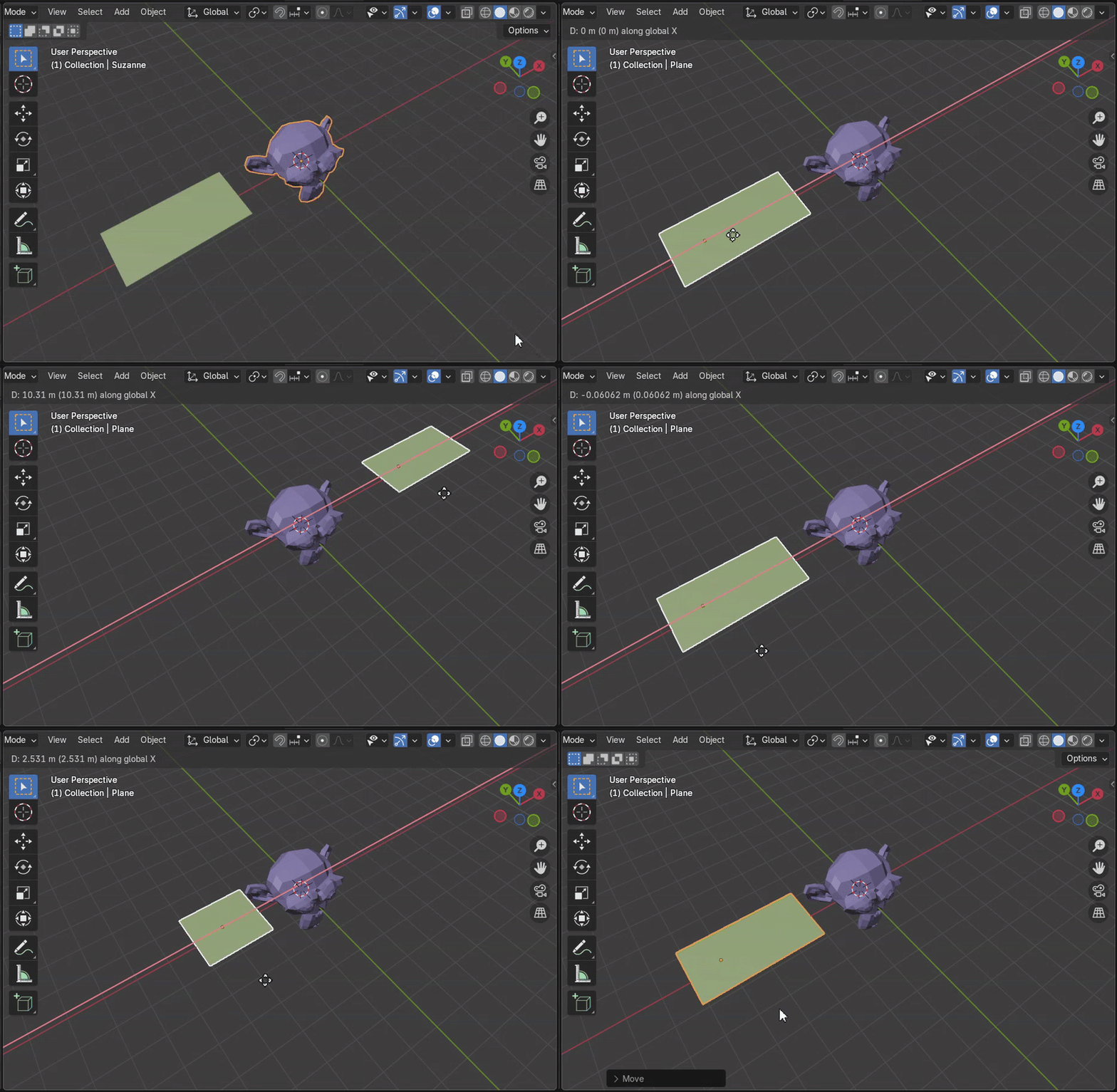
I figured out a cool trick for cutting off parts of an object when it intersects with something else. Like, in this gif, there’s a monkey head model in the center, and as a plane moves through it, the part that intersects just disappears.

Demo

The idea is pretty simple: you shrink the geometry of the "cutter" object down to a cube, get its min and max coordinates along each axis, and then for every point on the object you're trimming, you check whether it falls within that range. If it does — boom, it gets deleted.

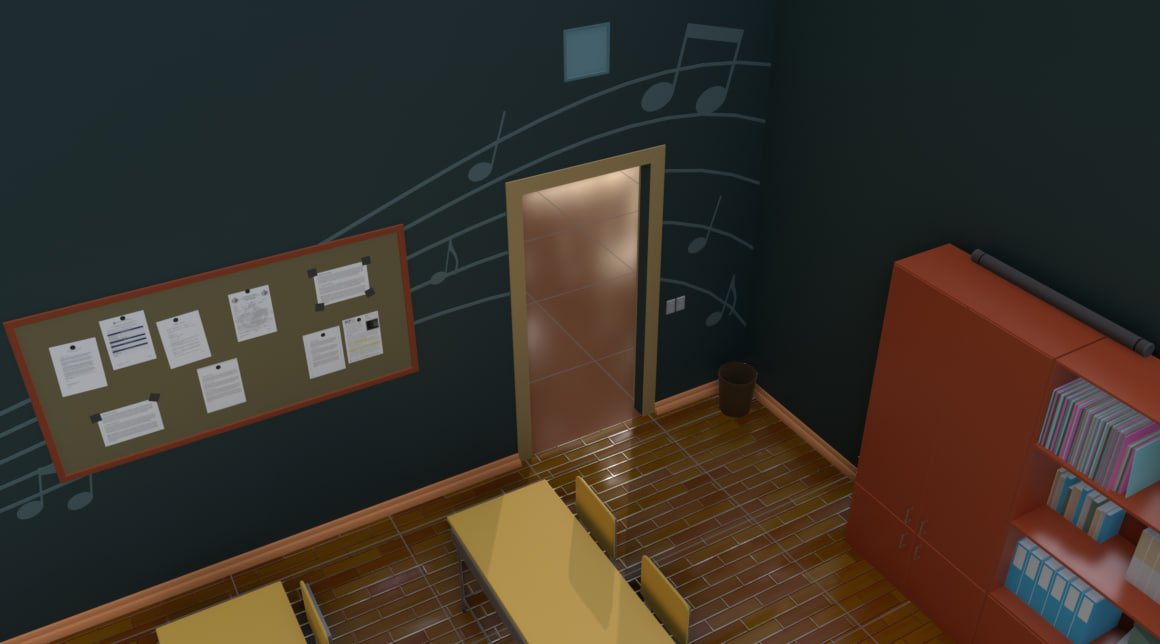
There are tons of ways you could use this. For example, I used it to automatically trim parts of decorative music staff lines on a wall so they wouldn't go across a doorway.

Example

Sure, you could do it by hand, without geometry nodes, but that would kill flexibility. If the wall size, door size, or the angle of the lines changes — you'd have to redo everything from scratch.

The Genie Problem
12 April 2025 ·

Returning to Volka's room, the old man turned round slyly, snapped the fingers of his left hand, and there appeared on the wall over the aquarium an exact copy of the telephone hanging in the hall.

"Now you can talk to your friends as much as you like without leaving your own room."

"Golly, thanks a lot!" Volka said gratefully. He removed the receiver, pressed it to his ear and listened. There was no dial tone.

"Hello! Hello!" he shouted. He shook the receiver and then blew into it. Still, there was no dial tone.

"The phone's broken," he explained to Hottabych. "Let's unscrew the receiver and see what's wrong."

However, despite all his efforts, he could not unscrew it.

"It's made of the finest black marble," Hottabych boasted.

"Then there's nothing inside?" Volka asked disappointedly.

"Why, is there supposed to be something inside this, too? Just like in a watch?"

"Now I know why it doesn't work. You've only made a model of a telephone, without anything that's supposed to go inside it. But the insides are the most important part."

"The Old Genie Hottabych", Lazar Lagin

When I’m doing 3D modeling, I often feel like that genie. He also tried to mimic the shape of things and jazz them up, but always ended up failing ‘cause he hadn’t got a clue about what was inside.

I’m just the same. For the past month, I’ve been putting the finishing touches on a model of a school music room, and guess what? I’ve learned more about how pianos work than I have in my whole life before. I could even give a quick lecture on heating systems in Russian schools — talking about sectional, panel, cast iron, and aluminum radiators, which types pop up most, the spacing between them, why you shouldn’t hook up three in a row, and so on.

I read about this effect: like when you're drawing, say, samurai armor — you end up inadvertently learning heaps about the properties of leather, the different kinds of metal, and the whole tech stack of the samurai era. I never thought I'd run into that from day one — but hey, I think it's a good thing. It fires up your neural connections, broadens your view of the world, sparks your creativity, and all that jazz.

Plus, it’s way more fun working on a model when you actually know what’s going on under the hood.
Creepy Graveyard
26 November 2024 ·

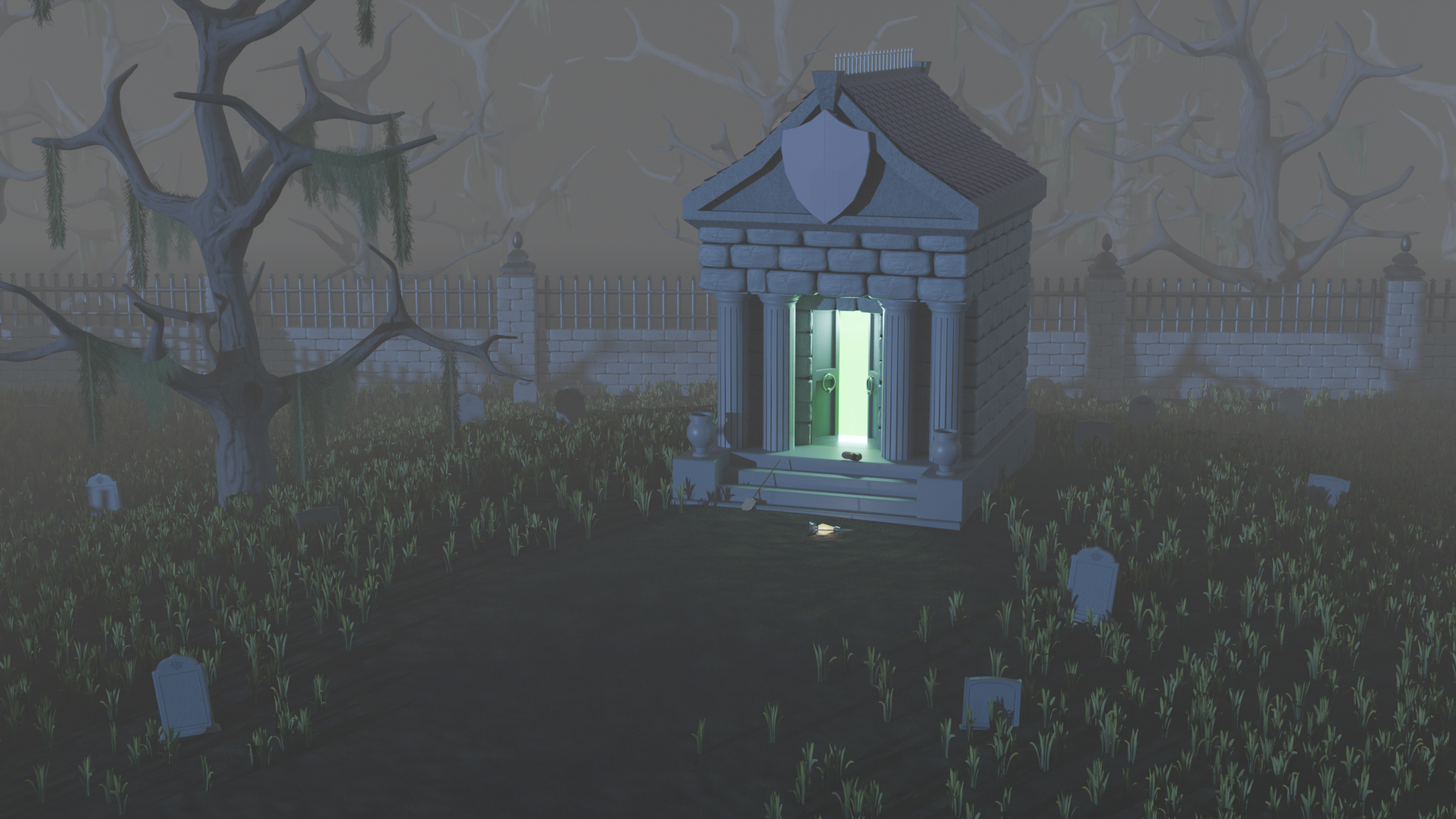
Still learning 3D in my free time. Here's my first somewhat independent project after finishing a course recently.

Creepy Graveyard

Of course, there are plenty of issues: the models, the colors, the composition... Honestly, pretty much everything. Good thing the scene is set at night with fog, so it's easy to hide the worst spots. I wouldn't be surprised if the course creators picked this setting on purpose to keep beginners from getting too discouraged :)

That said, I'm happy with the result. At this stage, perfectionism feels more like an enemy than a friend. And hey, it’s definitely better than my last attempt! Back then, I was totally green in Blender and scared to deviate even slightly from the instructor: ten minutes of watching, ten minutes of copying.

That approach works at the very beginning, but it doesn't help you learn how to solve problems. This time, I watched a few lessons back-to-back for about an hour or two, then tried to figure things out on my own. I only went back to the videos when I was completely stuck. Feels like I’m actually retaining a lot more this way.

Long story short, the thing is done. On to the next one!

UPD: One of the founders of FlippedNormals recorded a video with the same thoughts about training.

Rapture
31 August 2024 ·

I remember how amazed I was when I worked with window functions in PostgreSQL for the first time. You can adjust the calculation window for each row individually! And even segment it in advance. And all this is done natively, within a regular query, no extra add-ons needed. The standard aggregation with grouping and subqueries that I was used to in 1C suddenly turned into a pumpkin, just like Cinderella's carriage at midnight.

Recently, I’ve been learning Blender, and I suddenly felt the same excitement for the same reason. The fact that you can freely move objects around the 3D Viewport with the Move command was clear from the start, fine. However, when it hit me that each object is a set of polygons, and that each polygon can also be moved freely, leading to a natural reshaping of the object's geometry — that’s when it really got me.

Technology is amazing. Learning is awesome. Moments like these make me want to keep doing it over and over again :)